Landscaping · Guide
Park Landscaping for Housing Societies in Pakistan: A Planning Guide for Developers and Management Committees
By M.H Developers Team · Updated · 6 min read
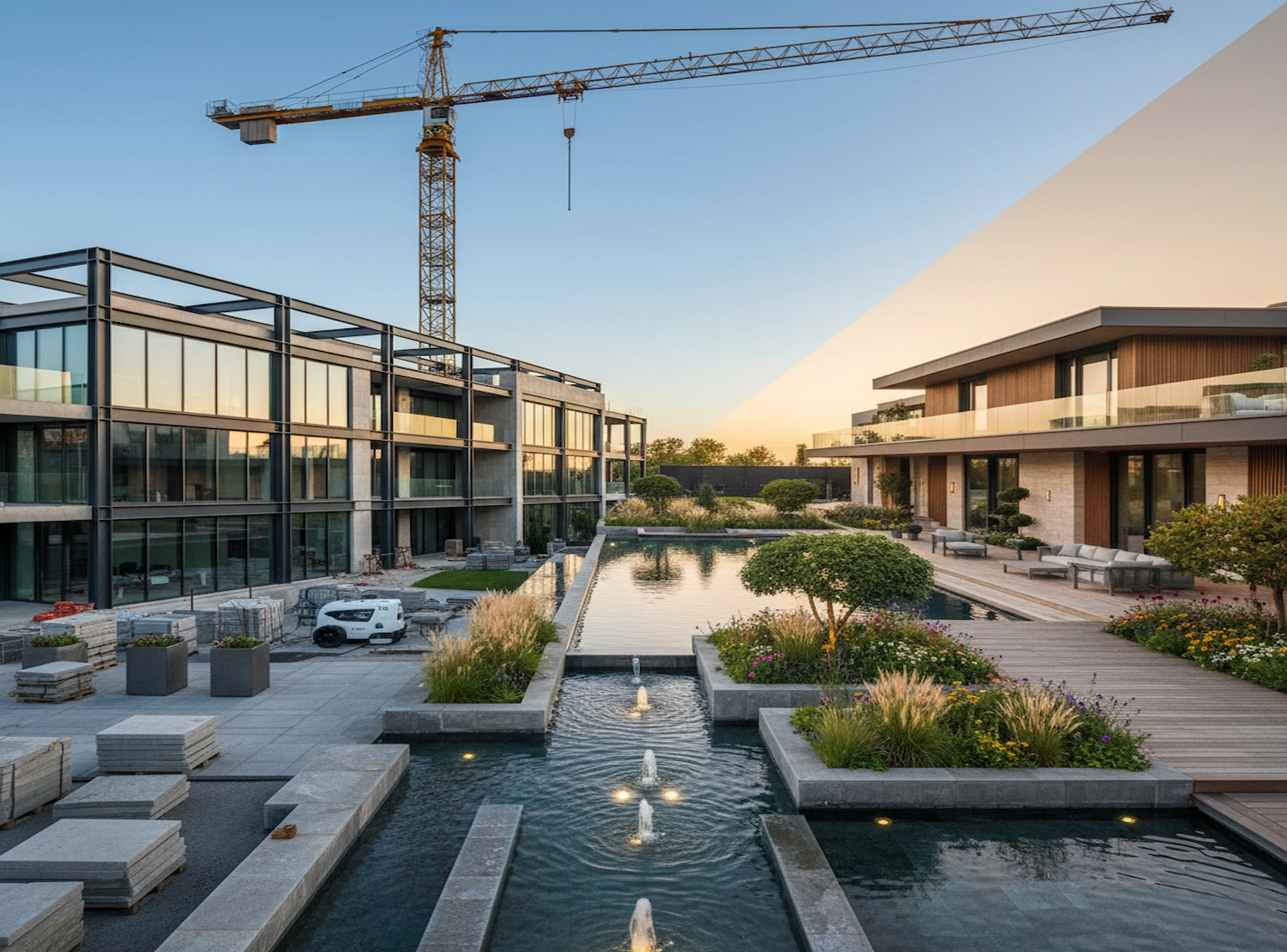
Parks and green belts are among the first things buyers notice when they visit a housing society. Well-kept parks raise property values, give families a safe place to walk and play, and make a scheme feel established. Poorly planned parks do the opposite: dusty grounds, broken swings, dead trees and fountains that stopped working a year after launch.
This guide is for housing society developers, management committees and commercial property owners in Lahore and across Pakistan who want parks that look good on opening day and still work five years later.
Start with a master plan, not with plants
Good park landscaping starts on paper. A master plan should map entry points, walking routes, play zones, seating, lighting, water supply, drainage and maintenance access before a single tree is planted.
Think about who will use the park and when. In Lahore, most park use happens early morning and after sunset during summer, so shade, lighting and safe walking surfaces matter more than decorative flower beds. Families with children need play areas visible from seating; older residents need even, well-lit walking tracks with benches at regular intervals.
Early coordination with the society's engineering team also saves money. Road levels, sewer lines, electricity cables and water mains all pass near parks and green belts. Knowing their exact routes lets designers place trees, tracks and fountains where they will not clash with services, and makes sure park levels sit slightly above surrounding roads so rainwater drains outward rather than collecting on the lawns.
Key elements of a society park
- Walking and jogging tracks: rubber, tuff tile or compacted surfaces with proper edging and slopes for drainage.
- Lawns: hard-wearing grass such as Bermuda or Dhaka grass in high-traffic areas; Mexican grass for ornamental sections.
- Shade trees: neem, sukh chain, amaltas, jamun, kachnar and pilkhan provide shade and handle heat and smog.
- Play areas: age-appropriate equipment on safety surfacing, fenced where possible.
- Seating and gazebos: shaded seating near play areas and along tracks.
- Lighting: LED pole lights along tracks and uplighting for trees for safety and ambience.
- Water features: fountains or dancing fountains as a focal point in main parks.
- Boundary and green belts: hedges, trees and planters along roads to reduce dust and noise.
Choose plants for heat, smog and low maintenance
Public parks get less individual attention than home gardens, so plant selection must favour toughness. Native and well-adapted species survive Lahore's 45°C summers and monsoon downpours with far less care than exotic ornamentals.
For green belts, a mix of shade trees, flowering shrubs like bougainvillea, kaner and tecoma, and hedges like duranta or ficus works well. Avoid planting large-rooted trees too close to walking tracks and underground services, as roots will lift paving over time. Space trees for their mature size, not their nursery size.
Irrigation, water management and fountains
Water is usually the biggest long-term cost and the most common reason society parks turn brown. Relying on hand watering from hoses wastes water and depends entirely on staff discipline.
A zoned irrigation system with sprinklers for lawns and drip lines for trees and hedges, controlled by timers, keeps parks green with less water and labour. Where possible, include storage tanks, rainwater harvesting from nearby roofs and roads, and recharge wells to reduce pressure on falling groundwater levels. Plan drainage at the same time, so monsoon rain from July to September flows away instead of flooding lawns and tracks.
A fountain or dancing fountain in the main park creates a strong first impression and a gathering point for evenings. However, water features need proper filtration, reliable pumps, safe electrical work and a clear plan for who will operate and maintain them.
Budget for running costs, including electricity and cleaning, from the start. A smaller feature that runs reliably every evening is worth more to residents than an elaborate one that is switched off most of the year.
Maintenance contracts: protect the investment
The difference between a great park and a neglected one is almost always maintenance. For societies and commercial properties, an annual maintenance contract with clear scope works better than ad-hoc hiring. A good contract should specify:
- Mowing, edging, pruning and hedge trimming frequency.
- Seasonal fertilisation, weed control and pest management.
- Irrigation checks, pump servicing and leak repair.
- Fountain cleaning, filtration and electrical checks.
- Replacement of dead plants and damaged grass patches.
- Monthly reporting with photos, and a named supervisor.
Safety, accessibility and inclusion
A park is a public space, and design choices affect who can use it. Walking tracks should be wide enough for two people to pass comfortably, with gentle ramps instead of steps wherever levels change, so that wheelchairs, strollers and older residents can move easily.
Lighting should cover tracks, entrances and play areas evenly, without dark corners, which makes parks safer for women and families in the evening. Fountains and ponds need shallow edges, railings or barriers where small children play. All electrical work around water should use waterproof fittings, earth leakage protection and cables laid in proper conduits. Separate sections or timings for ladies and children are also common in Pakistani housing societies and can be planned into the layout from the start.
Budgeting and phasing for society parks
Park budgets depend on area, hardscape, play equipment and water features, so it is best to budget by component rather than a single per-kanal figure. Lawns and planting are usually the most affordable part; walking tracks, boundary work, lighting poles, play equipment and fountains make up most of the cost.
Just as important is the operating budget. Management committees should plan yearly for maintenance staff or a maintenance contract, electricity for pumps and lights, fertiliser and plant replacement, and periodic repairs to tracks and play equipment. Parks that are handed over without an operating budget are the ones that decline fastest. A simple rule of thumb is to agree the yearly maintenance budget at the same time the construction budget is approved, so the park is funded from its first day of use.
Developers do not need to complete every park at once. A sensible approach is to fully finish the main park and entrance green belts first, since these shape buyer perception, then develop block parks as occupancy grows. Laying irrigation mains, drainage and lighting conduits early avoids digging up finished areas later.
Work with M.H Developers
M.H Developers combines landscaping with construction, so we can deliver park design, walking tracks, hardscape, irrigation, lighting and fountains under one team, and support ongoing maintenance. If you manage a housing society or commercial project in Lahore or elsewhere in Pakistan, call or WhatsApp +92 302 4279475 or contact us online to arrange a site visit and proposal.
Frequently Asked Questions
Which trees are best for parks in Lahore?
Neem, sukh chain, amaltas, jamun, kachnar and pilkhan are good choices because they provide shade and cope with Lahore's heat, monsoon and smog.
What surface is best for a walking track in a society park?
Tuff tiles and compacted surfaces are durable and economical. Rubber or EPDM surfaces are softer on joints but cost more. All tracks need proper edging and drainage slopes.
How can a housing society reduce park water costs?
Use zoned sprinkler and drip irrigation with timers, choose heat-tolerant plants, mulch tree bases and add rainwater harvesting and recharge wells where possible.
Is an annual maintenance contract worth it for society parks?
Yes. A contract with a defined scope, schedule and reporting keeps parks consistent and usually costs less than repairing neglected lawns, pumps and fountains later.
How long does it take to develop a society park?
A medium-sized park with lawns, tracks, lighting and irrigation typically takes around 1 to 3 months, depending on size, hardscape and water features.
Planning a project in Lahore?
M.H Developers offers a free site visit and an itemised quotation for landscaping and construction projects in Lahore and across Pakistan.